Posts

Showing posts with the label Writing

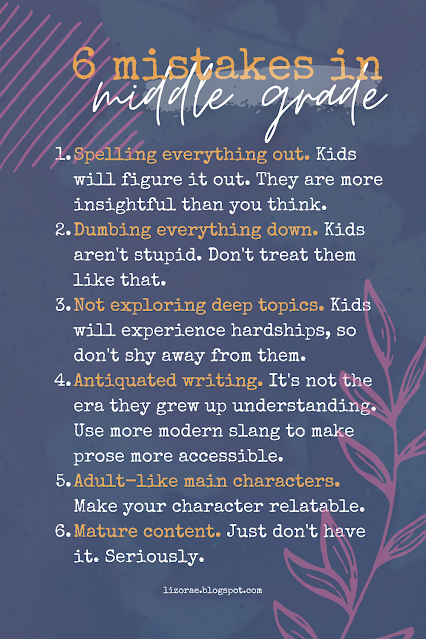
#WQT: 6 Mistakes In Middle Grade Fiction
Image
Transcript -  6 Mistakes in Middle Grade Spelling everything out. Kids will figure it out. They are more insightful than you think. Dumbing everything down. Kids aren't stupid. Don't treat them like that. Not exploring deep topics. Kids will experience hardships, so don't shy away from them. Antiquated writing. It's not the era they grew up understanding. Use more modern slang to make prose more accessible. Adult-like main characters. Make your character relatable. Mature content. Just don't have it. Seriously. 

#WQT: 7 Steps To Writing Fast

Image
Transcript - 7 Steps To Writing Fast Start early. Use as much time as possible. Have a plan. Save you from changing your mind and a gazillion pages. Type or write fast. Scribble, but make it legible. Skips parts you don't know. Come back to them later. Write what you know. Save you from researching. Don't be afraid to ramble. Editing can fix that. Don't edit while writing. It's more important to get things down than to make it perfect.

4 Lessons From Keeper Of The Lost Cities

Image
Keeper of the Lost Cities  is a MG fantasy series by Shannon Messenger. It's currently 8.5 books long and it gets so much hype. With one more book on the way, what can we look forward to? Despite all its hype, there's a lot  that has been complained about. And most of it is justified.  I've been with this series since the release of Neverseen , Book 4. While I enjoyed it at first, the more I read it, the less I enjoy it. I feel like the series began with so much potential, but missed the mark by a long shot.  Here's the four biggest problems we can take away from this series. Let's get to!    1. Special snowflake and cardboard cutouts  Our main character, Sophie Foster, is a special snowflake. She's the specialest of special snowflakes. First, what does it mean?  To be a special snowflake means that the character is treated differently, generally worshipped, because of their supposedly amazing qualities. Here's a few common traits: The world re...

5 Ways To Hone Your WRITING MUSCLE

Image
To be a successful author , building your writing muscle is something you should focus on as early as possible.  Why? It will make your writing life SO much easier. It will take you less time to warm up, help you write more in less time and ultimately, you'll get more books out.  The best thing about this part is that you can start now. It's easier than struggling through a novel - and much faster too.  So here's five ways to hone your writing muscle. Let's get to!    1. Blogging  Starting with an obvious one, blogging! This has been paramount to building my writing muscle. You can compare my older and newer posts to see how far I've come.  Blogging has a huge influence on your writing. It has a consistent nature, so you become used to writing on a regular basis. It also helps you find your  voice  and share your ideas to the public. An engaged audience will help shape you into the best you can.  It doesn't matter what you're blogging...

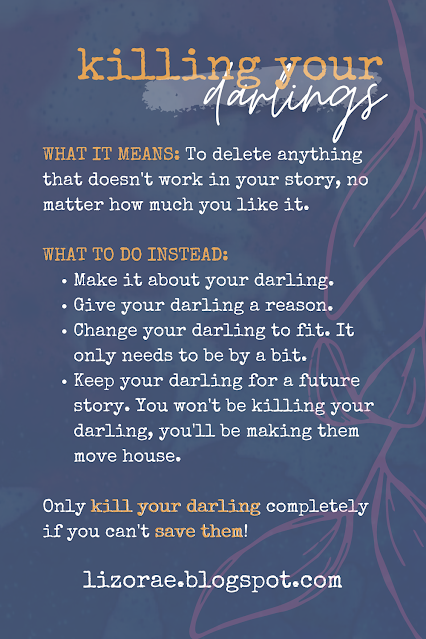
#WQT: Killing Your Darlings

Image
Transcript Killing your darlings? WHAT IT MEANS: To delete anything that doesn't work in your story, no matter how much you like it. WHAT TO DO INSTEAD: Make it about your darling. Give your darling a reason. Change your darling to fit. It only needs to be by a bit. Keep your darling for a future story. You won't be killing your darling, you'll be making them move house. Only kill your darling completely if you can't save them!

3 Lessons From The Boy And The Spy

Image
The Boy and the Spy  by Felice Arena is a MG historical fiction set during one of the World Wars. I can't remember since it's been a while since I read it. (Edit: WW2, thank you Goodreads reviews.) I try to keep the  Lessons From The Media   positive, even when noting the weaker aspect. Unfortunately, out of my February reads,  The Boy and the Spy  is one of two books I can formulate a post on. I happen to dislike this one slightly less than the other one, so here's the three main things that threw me off.  Disclaimer: this is more of a rant than an informative post. Apologies in advance.  Let's get to!    1. Clumsy prose.  Simple prose has a certain charm to it. Take The Travelling Cat Chronicles  for example. It's another February read I will recommend to anyone who wants a bittersweet, slow read. The prose is simple but still captures the reader's attention. It helps that Nana, the narrator, has a  personality-filled ...

BEFORE YOU BECOME AN AUTHOR: Hard Truths About Writing

Image
So you want to be an author.  Being an author is something a lot of people dream of, but not everyone is successful. To be called an author is easy. Be dedicated to your writing. I call myself an author even though I haven't published anything. Am I successful? By most accounts, no I am not. To be fair, I've just begun my journey, so I still work and hope.  That said, I've been writing for a number of years, though struggling would be a better word. Writing is hard, and writing full time is something I'm yet to achieve.  I'm sure we've all dreamt of earning millions or billions of money, going on talk shows and imaging our movie or TV show adaptation. I definitely have. But even with all the talent and resources in the world, success isn't guaranteed.  What I've learnt in those years where I've stopped being a writer and become an author are things they don't tell you in schools. They were huge eye-openers as I floundered in my stories and dreams...

#WQT: 10 Tips To Ace Cowriting

Image
   Transcript  10 Tips To Ace Cowriting  Before Partnering Get to know each other. Lay out your rules. Discuss big decisions. While Writing Leave your ego at the door. Don't be overly considerate. Have open communication. Have face-to-face planning time. Find a writing style that works for both of you. Use Google Docs and Sites. Promote each other on your social platforms.  

6.5 Lessons From The WHISPER DUOLOGY

Image
The Whisper  duology , comprising of Whisper  and Weapon , is by Australian author Lynette Noni . If you guys read last week's post , you'll remember her from the YA section.  I have been most fortunate to skip the tense waiting between books and binged the whole series within a week. While I don't think it beats her Medoran Chronicles , it's still an enjoyable read. It's short, so it doesn't take up much time if you have other things to do. For those who haven't read it, it's a dystopian story about Jane Doe. Jane is locked up in a secret government agency facility called Lengard, a place that is, to say the least, unpleasant. She hasn't spoken in two years.  Without further chit-chat, here's 6.5 lessons from the  Whisper  duology .  Let's get to!    1. Keep consistent characterisation  Authors love to talk about how they developed their characters. Oh, I used 67 different questionnaires , one might say. Or, I used every major person...

MAKING READERS FEEL SOMETHING: 6 Secrets To Writing Powerful Emotions

Image
The best books are the ones that make readers feel something. Fight me.   When people say to make readers "feel something", the first thing most authors think of is to make them cry. But that's only one part of it. Don't get me wrong, I'm a sucker for books that make me tear up.  Beyond crying - or the base emotion of sadness - you get laughter, suspicion, fear. Make readers have to think about the issues you bring up - your themes. Shock them. You want readers to come away from this emotional rollercoaster wanting more.  So how do you do this? Write impactful scenes. Make them mean something.  Let's get to!    1. Get in the mood  If you're not emotionally invested in whatever's going on in your story, how can you expect readers to be invested? Let's not forget you're the one who revealed the characters and their stories.   Before writing a scene, you need to get in the right mood. While not all authors and readers are the same, if you...

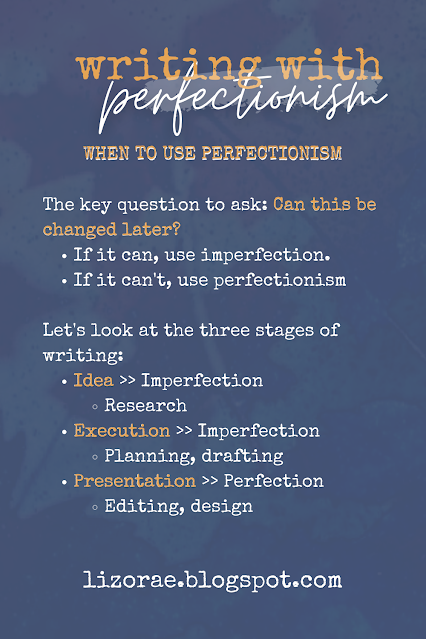
#WQT: WRITING WITH PERFECTIONISM

Image
Transcript  Writing With Perfectionism: When to use perfectionism in writing The key question to ask: Can this be changed later? If it can, use imperfection. If it can't, use perfectionism.    Let's look at the three stages of writing: Idea >> Imperfection Research Execution >> Imperfection Planning, drafting Presentation >> Perfection Editing, design

MISCOMMUNICATION: Why it sucks and how to make it work

Image
We've all seen miscommunication in fiction. I don't know about you, but it drives me insane . I find myself internally screaming like people in memes, and I don't know that many memes .  Communication is something only living things can do. Go figure. And it's an amazing aspect of humanity. It's how we exchange ideas, feelings, thoughts. I revel in overthinking about the unspoken thoughts. Let's not talk about how this probably isn't good for mental health .  You understand what I'm typing because writing is a form of communication. Books are a form of communication. Anything in the arts is a form of communication. Everyone knows this. You might not know communication also includes your body language, tone, disjointed speech.  What happens when you don't have communication? To put it shortly: bad stuff. You might be able to sprinkle in some humour, for sure. But most of the time, no communication means miscommunication. While it may provide sweet, sw...