Posts

5 Foreshadowing Tips With Zootopia
Image
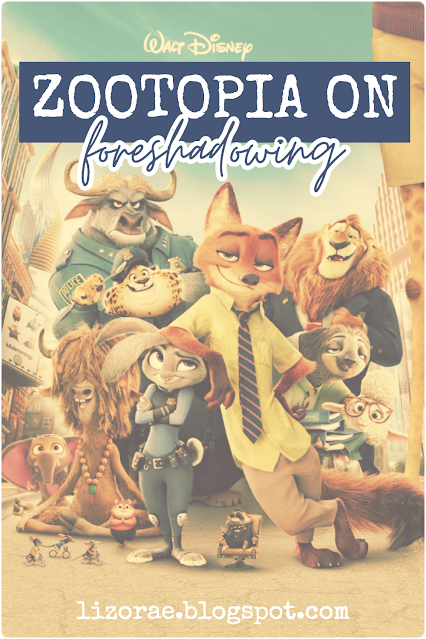
Zootopia  is a fantastic movie on several levels. Firstly, its brilliant way of addressing intersectionality and secondly, its foreshadowing, which is today's blog topic. Foreshadowing is a technique that sets up or prepares the readers for a reveal later on in the story. There may be spoilers , but hopefully you've already watched this epic movie and this is no problem. 1. Foreshadow early. Don't be a sloth when you foreshadow. Source: Giphy One of the most important aspects of foreshadowing is to do it ASAP. In Zootopia , the conflict is foreshadowed in the opening scene! Of course, you don't necessarily need to start this early because it might not work for your story like it works for  Zootopia . What matters here is weave a clue to set up something in later scenes. In Neil Gaiman's Masterclass Article , he states: The closer to an event foreshadowing is placed, the less effective it usually is. In fact, foreshadowing immediately before an event...
5 Valentine's Gifts For The Love Interest

Image
With Valentine's Day around, people are giving gifts to their loved ones. Or, you know, the person they like  like. But Valentine's Day doesn't have to only be for the lovebirds, it can be for us authors too. Does your character have a love interest? Here's some great gifts to give them! Warning: There may be sarcasm ahead. 1. House alarms.  The kidnappers should invest in a sedative. Source: Giphy Love interests get kidnapped a lot. Why? I don't know. But often, the love interest is too helpless to defend against their kidnappers. So why not give them house alarms to give warning when their house is broken into? It might give the love interest and their family enough time to hide from the to-be kidnappers. Maybe they'll simply evacuate their house instead, just in case they can't defend themselves. 2. A Bodyguard. A job can't be done half heartedly. Source: Giphy On the topic of defence, it might be a good idea to give the love in...

When To Use Perfectionism In Writing

Image
I'm an INFJ. This type is known for being a perfectionist. I'm also a Type 1 on the Enneagram, which is sometimes known as The Perfectionist. Yep. I'm notoriously perfectionistic. Back at school, I would procrastinate on tasks because I was trying to make it perfect. Trying to get that A+. (I later found out they didn't do A+'s so...yeah.) I would spend all my time trying to make the project absolutely perfect. I'd do all the research, formatting and all the other things my younger self thought I had to do but I'd never actually do it. The night before whatever assignment I was doing was due, I'd rush everything. So of course it didn't meet my standard and of course  I was tired the next day. So then I tried to learn how to deal with perfectionism but treating it like a plague didn't sit well with me. Instead, I've realised that there's a time for perfectionism and a time for imperfectness. It's all about the balance. *sparkle fi...

Are You Writing's Prey? What Sid The Sloth Tells Us About Overcoming Fear

Image
From the second movie in the  Ice Age  franchise comes this phenomenal scene where Sid and Diego talk about Diego's fear of water. I mean, non-fear of water.  I'm going to pick apart the conversation, so this is basically several quotes in one. You can thank me later. I advise you watch the clip before reading the post so you have an understanding of the whole scene. Or, if you're an Ice Age fan like me, you already know the scene pretty well. And by pretty well, I really mean, very well. 1. "All animals feel fear."  Or, all humans  feel fear. (Because I'm assuming everyone reading this is a human.) If everyone feels fear, then we can rest assured we're not the only ones. Similar to how everyone needs water, we all get scared. I don't know about you, but knowing that makes me feel better. You're not the only one afraid. But because so many of us are scared, we can grow. It's part of our human nature. We're always striving to m...

Writing A Dynamic Series With The Freja Peachtree Trilogy

Image
This is the first post in the Lessons From The Media series. This features one of my all time favourite book and series: The Freja Peachtree Series  by Aussie (yay!) author Katrina Nannestad . It's a trilogy beginning with  The Girl, The Dog And The Writer In Rome , followed by Provence and Lucerne . It's an MG series, but I think people of all ages would enjoy it. It's heartwarming, easy to read and (#Confession) made me feel like blubbering in some parts. Seriously, you need to go buy this book right now and read it. There will be some spoilers in here. What It Does Right  Everything. Go read it now. The end. Just kidding. (Kinda.) Something that really impressed me was how Nannestad wrote a fantastic dynamic series. There were cliffhangers (which annoyed me the fan) but each book was satisfying. A dynamic series is when the story centres around the characters trying to solve one big conflict over the course of several books. This is one of the three ...

Music Parody of When I Get Rich (When I Grow Up)

Image
An ode for all the broke authors. Disclaimer: for the record, not all authors are broke. I mean, all the authors I know are making a decent living. Also, the links here are not sponsored or affiliate links. *Image taken from the thumbnail of the YouTube video down below. It was not uploaded by me. When I get rich I will be rich enough to buy a write book That will help to structure my novel You have 'nuff bucks when you get rich And when I get rich I will be rich enough to buy a cup of Coffee from the cafe right next door to me A few times a day And when I get rich I will buy a L'enger Circ' I can plan my book then rearrange In bed late every night And I'll start a Site Using  Wordpress and Bluehost Or maybe Siteground  or with HostPapa But I'll choose later 'Cause by then I'll have cash When I get rich When I get rich, when I get rich, (when I get rich) I will be rich enough to hire peeps To edit, judge and make a fr...

Pros And Cons Of A Small Cast

Image
We love reading about characters and the trouble they get into. But there's only so much love that goes around when it comes to fictional people. Sometimes, a large cast like in The Lord of the Rings  (JRR Tolkien) works, but a small cast like Pevensie siblings in The Chronicles of Narnia  (CS Lewis) usually works better. Here are some pros and cons for a small cast. Pros 1. It keeps the story concise. With a small cast, the story centres around those few characters. This is good because your characters are the heart of your story. People will read a not-so-amazing story if they have characters they care about. Without the choice of a large character group, most of the conflicts and dynamics are linked to a few characters. Everything around the story goes back to characters the reader cares about. The catch to this is that you must seriously develop this character. 2. It's easier to remember the characters. In a story, we tend to remember the main character f...

Don't Quit Writing Says Richard Bach

Image
Welcome to the first post in This Quote Matters. This is a series I'm doing every first Monday of the month. The quotes I choose are ones I believe are important for authors to hear. Or, you know, read. Will this text be copied and pasted into the introduction for every This Quote Matters post? Yes, yes it will. "A professional writer is an amateur who didn't quit." - Richard Bach Why This Matters As a young writer, I was like: Ah, those days when I had no computer. Or WiFi. Or knowing about these weird things called Writing Blogs. So there I was, writing stories with absolutely no structure whatsoever, zero emotional attachment and 100% dedicated to said is dead. In other words, the stuff I wrote was trash. Even when other people said it was good, I knew it wasn't great. Writing determination was like: But then I stumbled upon this quote. And I realised three important things. 1. Making mistakes is inevitable. Like it or not, you...

Writers vs Authors

Image
The terms "writer" and "author" are often used interchangeably. Both terms are technically the same, but I believe there's a difference. This is a short post explaining my views on this topic. According to Google, the definition of writer is: "a person who writes books, stories or articles as a job or occupation." And for author: "a writer of a book, article, or document." Same thing, right? But here's what I think makes the difference between being a writer and being an author. Writers could be anyone. All you have to do is put words down onto paper. It doesn't matter what you write, you're a writer. On the other hand, authors are people who are willing to work hard and grit through the tough times for their writing. These are the people who will do nearly anything to make their story as best as it can. It takes special determination a lot of people don't actually have. But therein lies the specialness of being an ...

Three Reasons Why Accuracy Is Important

Image
Have you ever read a book or watched a movie and the content goes against everything you learnt at school? And then you're all like: *pauses and blinks* well, that's not right. So you know the feeling. Here are three reasons why accuracy is so important when you're writing. 1. Inaccuracy jolts the reader out of the story. When readers read, you want them to read late late late into the night. Authors are sadist that way. You want them to say: I can't put this book down! To do that, you want to give the reader a smooth read. Any kind of break is a good reason to put the book down. This isn't always a bad thing, but it definitely is if the reason is an Inaccuracy Jolt. When this happens, the reader goes through four mental processes. Wait, what? Hang on... Oh.  This is wrong. And then they have to get back into the flow of continuing to read the story. It disrupts how readers are able to comprehend and lowers their liking for your story. 2. It...